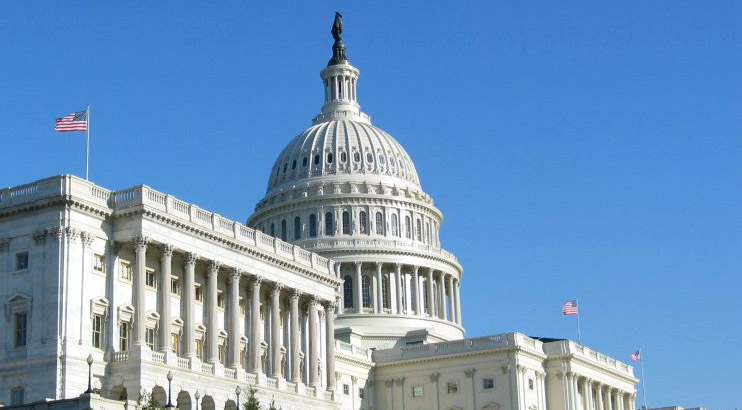
Make America Secure and Prosperous Appropriations Act - H.R. 3354
Summary
The House passed H.R.3354 (211-198), which is an omnibus for FY2018 appropriations. H.R.3354 provides $1.1 trillion in regular funding for all 12 individual appropriations bills and also includes the $1.6 billion in border wall funding.
Congress adopted a bipartisan amendment to roll back Attorney General Jeff Sessions’s expansion of asset forfeiture. Civil asset forfeiture is a practice in which law enforcement can take assets from a person who is suspected of a crime, even without a charge or conviction. Sessions revived the Justice Department’s Equitable Sharing Program, which allowed state and local police agencies to take assets and then give them to the federal government — which would in turn give a chunk back to local police. This served as a way for these local agencies to skirt past state laws designed to limit asset forfeiture. The amendment passed with a voice vote, meaning it had overwhelming support. Similar legislation is also pending in Congress, the Fifth Amendment Integrity Restoration (S.642 & H.R. 1555).
H.R. 3354 provides $1.1 trillion in regular funding for all 12 individual appropriations bills – Interior; Agriculture; Commerce, Justice, Science; Financial Services; Labor, HHS, Education; Homeland Security; State, Foreign Operations; Transportation, Housing and Urban Development; Defense; Legislative Branch; Military Construction/Veterans Affairs; and Energy and Water. .
The major provisions of the bill are as follows:
Department of Interior, Environment, and Related Agencies (Division A)—This division provides $31.4 billion for the Department of the Interior, the Environmental Protection Agency (EPA), the Forest Service, the Indian Health Service, and various independent and related agencies. This amount is $824 million below the fiscal year 2017 enacted level and $4.3 billion above the President’s budget request. The bill cuts funding for the EPA by $534 million below FY17 levels – bringing EPA’s budget to below FY06 levels. For more detailed information about programmatic funding levels in this division of the bill, please click here.
Agriculture, Rural Development, Food and Drug Administration, and Related Agencies (Division B)—This division provides $20 billion in discretionary funding, which is $876 million lower than the fiscal year 2017 enacted level and $4.64 billion above the President’s budget request. The legislation prioritizes this funding in programs for rural communities, farmers, ranchers, food and drug safety, and nutrition for those in need. The bill reduces funding for the Supplemental Nutrition Assistance Program (SNAP) and the Women, Infants, and Children program (WIC) to reflect declining enrollment while ensuring all eligible participants can receive fully allowed benefits. For more detailed information about programmatic funding levels in this division of the bill, please click here.
Commerce, Justice, Science and Related Agencies (Division C)—This division provides $54 billion in total discretionary funding, a decrease of $2.6 billion below fiscal year 2017 and $4.8 billion above the President’s request for these programs. The bill increases funding for law enforcement (FBI, DEA, US Attorneys, US Marshals, and ATF) to combat terrorism, violent crime, and drug (especially opioid) traffickers. The bill addresses illegal immigration by increasing funding for the Executive Office of Immigration Review to add judge teams and strengthen the U.S. Marshals border and immigration efforts. For more detailed information about programmatic funding levels in this division of the bill, please click here.
Financial Services and General Government (Division D)—This division provides $20.2 billion in discretionary funding – $1.3 billion below the fiscal year 2017 enacted level and $2.5 billion below the President’s budget request. Among other provisions, the bill makes numerous changes to the structure of the Consumer Financial Protection Bureau, repeals several financial services regulations, repeals certain D.C. laws relating to assisted suicide and budget authority, and prevents the IRS from implementing the individual insurance mandate. The bill does not include any language allowing individuals authorized to be employed under the Deferred Action for Childhood Arrivals (DACA) program to be eligible for employment by the federal government. For more detailed information about programmatic funding levels in this division of the bill, please click here.
Department of Homeland Security (Division E)—This division provides $44.3 billion in discretionary funding for DHS, an increase of $1.9 billion above the fiscal year 2017 enacted level. In addition, the bill includes $6.8 billion – the same as the President’s request – for disaster relief and emergency response activities through the Federal Emergency Management Agency (FEMA).
The bill will include $1.57 billion for physical barrier construction along the Southern border. This includes $784 million for 32 miles of new border fencing in the Rio Grande Valley, Texas, $498 million for 28 miles of new levee wall in the Rio Grande Valley, $251 million for 14 miles of secondary fencing in San Diego, California, and $38 million for program planning and management. The funding for the wall was originally included in H.R. 3219, the Make America Secure Appropriations Act, 2018, which passed the House on July 27, 2017. For more detailed information about programmatic funding levels in this division of the bill, please click here.
Department of Labor, Health and Human Services, and Education, and Related Agencies (Division F)—This division provides $156 billion in discretionary funding, which is a reduction of $5 billion below the fiscal year 2017 enacted level. The bill cuts funding to lower-priority programs, while targeting investments in medical research, public health, biodefense, and important activities that help boost job growth. The legislation also includes several provisions to rein in unnecessary regulations, and to protect the sanctity of life. For more detailed information about programmatic funding levels in this division of the bill, please click here.
Department of State, Foreign Operations, and Related Programs (Division G)—This division provides $47.4 billion in both regular discretionary and Overseas Contingency Operations (OCO) funding. This total is $10 billion below the fiscal year 2017 enacted level or a 17 percent decrease when counting additional funds provided in the Security Assistance Appropriations Act of 2017. Within this amount, OCO funding totals $12 billion, which supports operations and assistance in areas of conflict, such as Iraq, Afghanistan, and Pakistan. The bill provides $6.1 billion for embassy security, including for facility upgrades and security personnel as recommended in the Benghazi Accountability Review Board report. The bill fully funds the $3.1 billion commitment to Israel, marking the last year of the current 10-year memorandum of understanding between the United States and Israel totaling $30 billion. The bill does not include funding for several controversial programs, including: the Green Climate Fund, international debt relief, the UN Educational, Scientific, and Cultural Organization (UNESCO),the Intergovernmental Panel on Climate Change, and the UN Population Fund (UNFPA). For more detailed information about programmatic funding levels in this division of the bill, please click here.
Transportation, Housing and Urban Development, and Related Agencies (Division H)—This division provides $56.5 billion in discretionary spending – $1.1 billion below fiscal year 2017 and $8.6 billion above the request. This funding is targeted to essential investments in transportation infrastructure, as well as fundamental community development and housing programs. The bill provides $1 billion for the FAA’s Next Generation Air Transportation Systems and does not increase passenger facility and general aviation fees. For more detailed information about programmatic funding levels in this division of the bill, please click here.
Appropriations bills included in the bill, pursuant to the rule, that previously passed the House:
Defense—This division provides $658.1 billion for the Department of Defense, which includes $73.9 billion in Overseas Contingency Operations (OCO). These funds are consistent with the House-passed Fiscal Year 2018 National Defense Authorization Act and the proposed Fiscal Year 2018 Budget Resolution ($621.5 billion in base defense spending and $74.6 billion in defense OCO).The legislation includes $138.3 billion to provide for 1,324,000 active-duty troops and 822,900 Guard and Reserve troops, as well as $1 billion for additional end strength, and fully funds a 2.4 percent pay raise for the military. For more detailed information about programmatic funding levels in this division of the bill, please click here.
Military Construction and Veterans Affairs—This division legislation provides $88.8 billion in discretionary funding in funding to house, train, and equip troops and provide care for our veterans – $6 billion above the fiscal year 2017 level. This includes $638 million in Overseas Contingency Operations funding, which includes funding for European Reassurance Initiative projects. For more detailed information about programmatic funding levels in this division of the bill, please click here.
Energy and Water—The bill provides $37.56 billion for national security efforts – including nuclear weapons activities – and energy and water infrastructure investments. This is $209 million below the fiscal year 2017 enacted level and $3.24 billion above the President’s budget request. For more detailed information about programmatic funding levels in this division of the bill, please click here.
Legislative Branch— The bill provides for the House and joint operations, excluding Senate-only items, is $3.58 billion. This is $100 million above the fiscal year 2017 level and $228 million below the President’s request. Additional funding is included to increase security for Members of Congress, staff, and their constituents in the wake of the shooting at the Congressional baseball team practice this month. For more detailed information about programmatic funding levels in this division of the bill, please click here.
Policy Provisions
Waters of the United States rule- The bill includes language authorizing the Administrator of the Environmental Protection Agency and the Secretary of the Army to withdraw the Waters of the United States rule. In June 2015, the Army Corps of Engineers and Environmental Protection Agency (EPA) published the Waters of the United States, which revised regulations defining the scope of waters protected and regulated under the Clean Water Act (CWA). The rule dramatically increased the scope of waters subject to regulations and permitting requirements under the CWA. The rule has been stayed by a federal court.
Sage-Grouse—The bill continues a one-year delay on any further Endangered Species Act status reviews, determinations, and rulemakings for greater sage-grouse.
Guantanamo Bay—The bill continues a prohibition on the transfer or release of Guantanamo detainees into the U.S. The bill also requires a notification to Congress if the State Department commits to providing assistance to foreign governments that accept Guantanamo detainees.
Second Amendment—The bill continues all legislative provisions carried in previous years to protect the Second Amendment rights of all Americans, and goes a step further to make four of these provisions permanent law. These four provisions relate to import applications on shotguns for sporting purposes, the importation of “curios and relics” firearms, the export of firearms to Canada, and a prohibition on “gun-walking,” such as the “Fast and Furious” operation. The bill includes a prohibition on the implementation of the UN Arms Trade Treaty, and prohibits unauthorized reporting and registration requirement on consumers purchasing multiple rifles or shotguns.
Settlement Slush Fund Payment Prohibition—The bill would prohibit the Justice Department from entering into or enforcing any settlement agreement for civil actions on behalf of the United States if that agreement requires the other party to the settlement to make a donation to a non-victim third party. In recent settlements with the United States, the terms of the settlement require financial institutions to donate funds to charitable and community institutions as a part of their restitution.
ObamaCare—The bill includes provisions to stop the IRS from implementing an individual insurance mandate on the American people. The bill also contains several provisions to stop the implementation of ObamaCare – including prohibiting the use of any new discretionary funding to implement ObamaCare.
SEC’s Reserve Fund—The bill rescinds the unobligated balances of the SEC’s Reserve Fund, which is a slush fund that allows the SEC to spend without Congressional oversight.
District of Columbia—The bill maintains provisions prohibiting federal and local funds from being used for abortion; maintains provisions to prohibit further marijuana legalization; maintains a prohibition on federal funds from being used for needle exchanges in the District of Columbia; repeals the “Local Budget Autonomy Amendment Act” – continuing congressional appropriation of the District’s local funds, and repeals the Death With Dignity Act of 2016 (D.C. Law 21–182) which allows assisted suicide for terminally ill adults.
Pro-Life Provisions— The bill continues existing policies related to the sanctity of life. Among other provisions, the bill prohibits the use of funds for abortion in the Federal Employee Health Benefits program, expands the Mexico City Policy (a policy prohibiting U.S. assistance to foreign nongovernmental organizations that promote or perform abortions to all global health programs), and prohibits funding for the UN Population Fund. The bill maintains longstanding pro-life riders, including the “Tiahrt Amendment,” which ensures family planning programs are voluntary; the “Helms Amendment,” which bans foreign aid from being spent on abortions; the “Kemp-Kasten Amendment,” which prohibits funds to organizations the President determines to support coercive abortion or involuntary sterilization and continues the requirement of a conscience clause for health insurance plans. The bill also includes the text of the Abortion Non-Discrimination Act.
Planned Parenthood—The bill prevents Planned Parenthood from receiving federal funds, saving $330 million in taxpayer dollars, and eliminates the Title X Family Planning program, saving $286 million.
Cuba—The bill prohibits the importation of property confiscated by the Cuban Government, and prohibits funds from being used to approve the licensing of a mark, trade name, or commercial name that was confiscated by the Cuban Government without express consent.
U.S. Postal Service—The bill maintains the six-day mail delivery requirement for the Postal Service.
IRS—The bill continues a number of provisions that prohibit the IRS from targeting groups for their ideological beliefs. The bill also includes a prohibition on a proposed regulation related to political activities and the tax-exempt status of 501(c)(4) organizations that could jeopardize the tax-exempt status of many nonprofit organizations and inhibit citizens from exercising their right to freedom of speech.
Financial Services Reforms—The bill includes a number of provisions that were included in H.R. 10, the Financial Choice Act, which passed the House by a vote of 233 to 186. Among other provisions, the bill brings the funding for the Federal Deposit Insurance Corporation, the Federal Housing Finance Agency, the National Credit Union Administration, the Consumer Financial Protection Bureau, the Comptroller of the Currency, and non-monetary policy related functions of the Board of Governors of the Federal Reserve System onto the appropriations process. The bill also removes the supervision authority for the CFPB, removes the agency’s authority to regulate small-dollar credit, and repeals several rules promulgated by the agency. The bill also repeals the Volker Rule, which, among other things, is intended to prohibit "banking entities" from engaging in all forms of "proprietary trading.”
Fiduciary Rule—The bill prohibits the enforcement of the “Fiduciary” rule, which places significant new regulatory burdens on retirement investment advisers. On April 8, 2016, DOL issued a final rule that redefined the term investment advice within pension and retirement plans. On April 7, 2017, DOL delayed the applicability date by 60 days to June 9, 2017, of (1) the expanded definition of investment advice and (2) the Impartial Conduct Standard of the Best Interest Contract (BIC) exemption. While these two aspects of the rule are currently in effect, other aspects of the exemptions become applicable on January 1, 2018.
Joint-Employer Standard—The bill includes a provision prohibiting the National Labor Relations Board (NLRB) from applying its revised “joint-employer” standard in new cases and proceedings. In its 2015 Browning-Ferris Industries (BFI) case, the NLRB adopted an expanded “joint employer” standard, which dramatically increased liability claims against companies based on the actions of other companies that they do business with.
Yucca Mountain – The bill continues congressional efforts to support the Yucca Mountain nuclear repository, providing $90 million for the Nuclear Waste Disposal program, $30 million for Defense Nuclear Waste Disposal, and $30 million for the Nuclear Regulatory Commission to continue the adjudication of DOE’s Yucca Mountain License application
Pay for Members of Congress— The legislation freezes pay for Members of Congress, preventing any pay increases in Fiscal Year 2018.
Background
The House Appropriations Committee passed each of the 12 Fiscal Year 2018 appropriations bills out of subcommittee and full committee. In May of 2017, the House passed the House Amendment to the Senate Amendment to H.R. 244, the Consolidated Appropriations Act, 2017. Funds provided under this Act expire September 30, 2017. On July 27, 2017, the House passed H.R. 3219, the Make America Secure Appropriations Act, 2018, by a vote of 235 to 192. H.R. 3219 combined four of the 12 appropriations bills, including Defense, Legislative Branch, Military Construction/Veterans Affairs, and Energy and Water. H.R. 3354 combines the remaining eight appropriations bills with the four previously passed bills.
Cost
A Congressional Budget Office (CBO) estimate is currently unavailable; however, the bill appropriates $1.1 trillion for all discretionary government programs.
Democratic Whip Steny Hoyer (MD):
"Before the August district work period, the House passed a package of four regular appropriations bills for FY 2018 as part of a “security minibus.” That package included the Defense, Legislative Branch, Military Construction-Veterans Affairs, and Energy and Water Development bills. In addition to multiple poison pill riders, it also contained a fifth division with $1.6 billion in taxpayer funding for construction of President Trump’s border wall.
H.R. 3354 packages together the eight remaining regular appropriations bills for Fiscal Year 2018 in discrete divisions. They are: Interior & Environment; Agriculture; Commerce, Justice, Science; Financial Services; Homeland Security; Labor, Health and Human Services, Education; State and Foreign Operations; and Transportation-Housing and Urban Development. A summary of the eight divisions can be found here. Upon passage, these will be coupled with the security minibus’s five divisions and sent to the Senate as one complete Omnibus Appropriations bill.
H.R. 3354 not only constitutes an inadequate investment in both the domestic and international activities of government, but also a skewed reprioritization laid out within each of its eight divisions that would have devastating impacts throughout the economy. It is clear that House Republicans would rather waste valuable time on partisan legislation that does not stand a chance of actually being signed into law instead of working with Democrats on responsible solutions that will create jobs and grow the economy.
Further, House Republicans are breaking their own promises of following regular order and an open legislative process by considering this package under structured rules that forego the open appropriations process, by acting on these bills before passing a budget resolution to provide topline funding guidance, and by packaging multiple unrelated issues into a single vehicle."
The Fifth Amendment Integrity Restoration (FAIR) ACT
The House adopted an amendment to H.R.3354, to roll back A.G. Jeff Sessions’ expansion of asset forfeiture. Civil asset forfeiture is a practice in which law enforcement can take assets from a person who is suspected of a crime, even without a charge or conviction.
A new proposal has been introduced to change when law enforcement can take a person's property. Right now, police can permanently seize items like vehicles, cash, and other assets before a suspect is convicted of a crime. U.S. Senator Rand Paul reintroduced S. 642, the FAIR (Fifth Amendment Integrity Restoration) Act to protect property owners’ rights and restore the Fifth Amendment’s role in civil forfeiture proceedings. Rep. Tim Walberg (R-MI) has introduced companion legislation (H.R. 1555) in the U.S. House of Representatives.
Do you think Congress should pass the FAIR (Fifth Amendment Integrity Restoration) Act?